| Pages in topic: [1 2] > | New translator looking for career advice. Thread poster: Ingrid Diniz
|
|---|
Hello, I am writing this because I would like to have a piece of advice and also to connect with all of you, if that is possible.
Before anything else, let me introduce myself.
My name is Ingrid and I'm from Brazil. I speak Portuguese, English and I understand a little bit of Spanish too.
I am new to the translation field. I hold a bachelor's degree in Pedagogy and another in Languages. I recently enrolled in a postgraduation course in translation, in order to b... See more Hello, I am writing this because I would like to have a piece of advice and also to connect with all of you, if that is possible.
Before anything else, let me introduce myself.
My name is Ingrid and I'm from Brazil. I speak Portuguese, English and I understand a little bit of Spanish too.
I am new to the translation field. I hold a bachelor's degree in Pedagogy and another in Languages. I recently enrolled in a postgraduation course in translation, in order to become a professional translator.
What would you recommend to me? Where should I start? How did you get your first translation job here and how many days were necessary to get it? Was it on the first try or not?
When you were doing your fisrt translation, how long did it take to get it done?
Feel free to share your experience with me or add any information that may be worth sharing to help me.
I would love to see how it has started for each of you.
 ▲ Collapse
| | | | Michael Newton 
United States
Local time: 09:41
Japanese to English
+ ...
Find another career. If you choose translation, you have nothing but frustration (and penury) in front of you.
| | | |
Ingrid Diniz wrote:
What would you recommend to me? Where should I start? How did you get your first translation job here and how many days were necessary to get it? Was it on the first try or not?
When you were doing your fisrt translation, how long did it take to get it done?
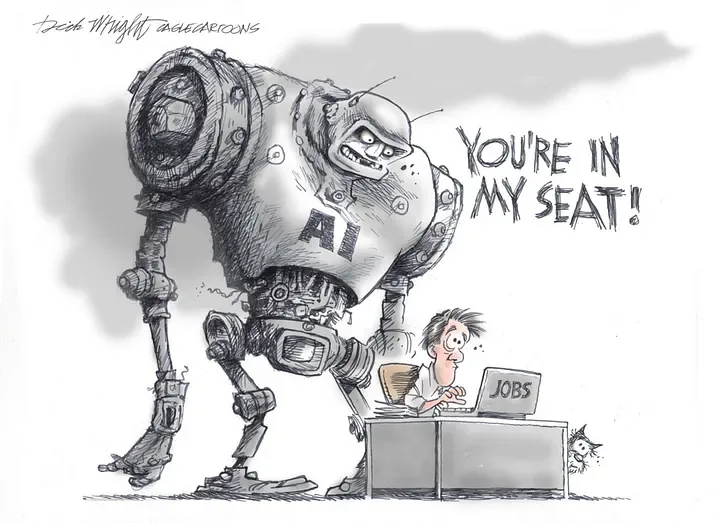
All of this is irrelevant in light of what the field of translation has become. The best advice I can give to aspiring translators is don’t do it. Translation was great when I started, that is no longer the case. Sorry. Thank AI.
| | | |
I advise you to run from it while you can...
| | |
|
|
|
Daryo
Local time: 14:41
Serbian to English
+ ...
| Do you really want to board a sinking ship | Jul 24 |
where half of the crew is busy unplugging the holes in the hull?
If you chose translating because you really like it, do it as a hobby - translate what you like when you like and if you make any money out of it consider it as a bonus.
But for the 'day job' better look for something else. There still are professions where real people are badly needed and where being bilingual is, if not a requirement, certainly a huge advantage. I don't know what's exactly the sit... See more where half of the crew is busy unplugging the holes in the hull?
If you chose translating because you really like it, do it as a hobby - translate what you like when you like and if you make any money out of it consider it as a bonus.
But for the 'day job' better look for something else. There still are professions where real people are badly needed and where being bilingual is, if not a requirement, certainly a huge advantage. I don't know what's exactly the situation in Brazil, but if you start looking with an open mind you'll find them.
As Michele Fauble said, decades ago translating was a great job - especially when you're lucky to be in high demand in your 'local market'. Hardly likely to happen NOW with your language pair - unless you are extremely lucky to find some very specialised niche market. The operative word being 'extremely lucky' ...
Only being realistic. ▲ Collapse
| | | | | Treat languages as a passion, not a profession. | Jul 25 |
That's it.
| | | | Gregor Trebec
Slovenia
Local time: 15:41
English to Slovenian
+ ...
I am not an expert but i came to think many here want to translate via the web, the internet. But the web cannot bring you steady income. Never did. At least where i come from. The buiseness still goes in the real world therefore look for clients 'outside' the computer.
| | | |
Ingrid Diniz wrote:
I am new to the translation field. I hold a bachelor's degree in Pedagogy and another in Languages. I recently enrolled in a postgraduation course in translation, in order to become a professional translator.
I don't want to discourage you, but I also don't want to give you unrealistic expectations.
The translation industry has changed dramatically in recent years. Many experienced translators with 15, 20 or even 30 years of experience are facing reduced workloads, lower rates and increasing competition from AI mainly. Building a freelance translation career today is considerably more challenging than it was a decade ago.
Since you already have a degree in Pedagogy, I would encourage you not to overlook this qualification. It may offer you greater stability and opportunities, and your translation training can still be valuable in the classroom. Translation is an excellent teaching tool and can help students develop vocabulary, grammar, reading comprehension, writing skills, cultural awareness and critical thinking.
I would also add one point about training. A postgraduate course in translation is undoubtedly worthwhile, but it is a specialisation, not a substitute for years of professional practice.
Likewise, having a degree in translation does not automatically make someone a good translator.
Translation is much more than knowing languages or mastering CAT tools. It requires excellent writing skills in your native language, strong research skills, sound judgement, subject-matter knowledge, cultural awareness, curiosity, consistency, and the ability to solve problems and make informed decisions. Those are skills that develop gradually through experience.
I wish you every success.
| | |
|
|
|
that won't be replaced by an IA bot for the foreseeable future. Preferably a manual trade.
| | | | Samuel Murray
Netherlands
Local time: 15:41
Member (2006)
English to Afrikaans
+ ...
Ingrid Diniz wrote:
What would you recommend to me?
My advice to you is the same as my advice to all new translators, despite the fact that the industry has changed dramatically and it's now 100x more difficult to break into translation.
You have to find clients, and the quickest way to find clients is to work for translation agencies*. So, visit the ProZ.com Blue Board, filter according to which agencies you would want to work for (e.g. agencies with a high rating, agencies in your preferred countries), visit their websites and apply to them or email them to market yourself to them. Also sign up with the top 400 or so translation companies on ProZ.com's company list.
https://www.proz.com/blueboard
https://www.proz.com/business
You can expect 1-2% of them to respond, and you can expect work from 1-2% of those that respond. So this is a numbers game: get yourself listed on the books of as many agencies as you can.
How did you get your first translation job here and how many days were necessary to get it?
When I studied translation, I was told by my professors that it takes 6-12 months for a translator to get enough clients to have sufficient income to sustain them. Of course, this was before the interwebs, but it still sounds like a good warning: initially, you will struggle a lot to get any work.
Was it on the first try or not?
I'm not sure what you mean by "first try" (-:
When you were doing your first translation, how long did it take to get it done?
My very first translation took 2 weeks to complete. But with agencies you're likely to get a lot of jobs that you can finish in an hour or two, and they'll likely expect you to deliver it within a day or two.
* The translation agency is your client.
[Edited at 2026-07-28 09:08 GMT]
| | | | Mario Chávez
United States
Local time: 09:41
English to Spanish
+ ...
| So many questions… | Jul 29 |
…and so few answers.
Hola, Ingrid,
Most of your questions will be answered in your first experience in the translation profession: approach more experienced translators where they congregate locally: do they have an association, a club? Go there and introduce yourself, and ask these questions there.
Forge relationships with your local peers, other translation students, translation company owners. Listen to them all.
Your questions will gradua... See more …and so few answers.
Hola, Ingrid,
Most of your questions will be answered in your first experience in the translation profession: approach more experienced translators where they congregate locally: do they have an association, a club? Go there and introduce yourself, and ask these questions there.
Forge relationships with your local peers, other translation students, translation company owners. Listen to them all.
Your questions will gradually find answers.
Mario Chávez
Ingrid Diniz wrote:
Hello, I am writing this because I would like to have a piece of advice and also to connect with all of you, if that is possible.
Before anything else, let me introduce myself.
My name is Ingrid and I'm from Brazil. I speak Portuguese, English and I understand a little bit of Spanish too.
I am new to the translation field. I hold a bachelor's degree in Pedagogy and another in Languages. I recently enrolled in a postgraduation course in translation, in order to become a professional translator.
What would you recommend to me? Where should I start? How did you get your first translation job here and how many days were necessary to get it? Was it on the first try or not?
When you were doing your fisrt translation, how long did it take to get it done?
Feel free to share your experience with me or add any information that may be worth sharing to help me.
I would love to see how it has started for each of you.
▲ Collapse
| | | | Mario Chávez
United States
Local time: 09:41
English to Spanish
+ ...
| Some do, some don't | Jul 29 |
It may so well be that frustration and penury are the fruits of the labors of some translators, but not all. Not even close.
My suggestion to Ingrid applies in your case as well.
Mario Chávez
Michael Newton wrote:
Find another career. If you choose translation, you have nothing but frustration (and penury) in front of you.
| | |
|
|
|
Daryo
Local time: 14:41
Serbian to English
+ ...
| x100 times vs x5 - 10 times? | Jul 29 |
Samuel Murray wrote:
Ingrid Diniz wrote:
What would you recommend to me?
My advice to you is the same as my advice to all new translators, despite the fact that the industry has changed dramatically and it's now 100x more difficult to break into translation.
You have to find clients, and the quickest way to find clients is to work for translation agencies*. So, visit the ProZ.com Blue Board, filter according to which agencies you would want to work for (e.g. agencies with a high rating, agencies in your preferred countries), visit their websites and apply to them or email them to market yourself to them. Also sign up with the top 400 or so translation companies on ProZ.com's company list.
https://www.proz.com/blueboard
https://www.proz.com/business
You can expect 1-2% of them to respond, and you can expect work from 1-2% of those that respond. So this is a numbers game: get yourself listed on the books of as many agencies as you can.
How did you get your first translation job here and how many days were necessary to get it?
When I studied translation, I was told by my professors that it takes 6-12 months for a translator to get enough clients to have sufficient income to sustain them. Of course, this was before the interwebs, but it still sounds like a good warning: initially, you will struggle a lot to get any work.
Was it on the first try or not?
I'm not sure what you mean by "first try" (-:
When you were doing your first translation, how long did it take to get it done?
My very first translation took 2 weeks to complete. But with agencies you're likely to get a lot of jobs that you can finish in an hour or two, and they'll likely expect you to deliver it within a day or two.
* The translation agency is your client. [Edited at 2026-07-28 09:08 GMT]
Of course, if you really persist you'll eventually find 'work in linguistic services' even if it's '100 times more difficult than it used to be'. Which part of it would warrant the label 'translation' is another matter.
The real question being: is it worth getting into it as of now?
Also, more importantly: which way the 'state of the market' is likely to evolve in the next few years, never mind a decade of two?
Do you want to find yourself in a profession going downhill fast for the vast majority of still remaining practitioners and trapped in it by the sunk cost fallacy?
It's not that the 'direction of travel' is difficult to see. Some saw it already years ago:
There's no future in translation 2008-08-02
I am a student specialised in translation and this is exactly the type of evolution in the tranlation's sphere that pushes me not to keep on getting specialised in that profession.
***I see that prices are low*** and that the biggest translation agencies now gather to have even more power concerning prices over translators.
What can we do against such things? An easy answer: nothing!
Translation was something I dreamed about when I was younger. Next week I'll turn 25 and I know that my professional future does not belong to translation anymore.
https://www.proz.com/forum/prozcom_translator_coop/110929-clients_large_translation_companies_now_talking_about_pooling_linguistic_data_should_we_be_there-page8.html#:~:text=There's%20no%20future,to%20translation%20anymore.
Notice the year: 2008!
Anyone claiming that anything has improved since?
As or the year 2026, easy to check it for yourself: just take a look in the Jobs section (and in few other sites) at what is on offer right now in your langue pair, and take into account that in few years time even these will be looking as 'damn good offers' [unless there is some miraculous reversal in the trend]. Does it look attractive enough to neglect other better possibilities that are 'only' 5 - 10 times more difficult to get into compared to before?
BTW if you decide to persist, agencies are 'the least bad option / the solution of last resort'. Better to aim from the start for direct clients (i.e. the ones who need your translations for themselves, as opposed to self-serving intermediaries) - takes more efforts (to put luck on your side…) and time but it's definitely worth it.
| | | | kd42
Estonia
Local time: 16:41
English to Russian
Daryo wrote:
Notice the year: 2008!
Anyone claiming that anything has improved since?
Laptops, rechargeable batteries, bicycles, smartphones.
The situation in the industry has worsened proportionally.
| | | | Samuel Murray
Netherlands
Local time: 15:41
Member (2006)
English to Afrikaans
+ ...
| I peaked in 2008-2018 | Aug 1 |
Daryo wrote:
Translation was something I dreamed about when I was younger. Next week I'll turn 25 and I know that my professional future does not belong to translation anymore.
... Notice the year: 2008!
And yet, 2008 was the year in which my translation business really took off. The years 2008-2018 was my best decade so far.
But I recognize the original poster's plight: 2005-2008 was a period in which translation agencies began to squeeze translators who had previously charged spectacular rates. This was the period between when translators had discovered CAT tools and when agencies started discovering CAT tools, or when CAT tools because generally affordable and generally feature-rich. During this phase, agencies began to realize that translators can do much more for much less, but many long-standing translators were still used to charging high rates, and those that adopted CAT tools early had gotten used to riding the wave of existing high rates combined with a newly acquired faster turnaround.
Alas, 2008 was also the year in which my translation rate peaked. From then onwards there was a constant pressure on rates, and my rate has gradually reduced to its current low levels.
There was a brief respite when MT suddenly became very good (Google Translate's statistical engine took a while to gain acceptance, but their neural network engine blew us away in around 2016) while agencies were slow adopters of MT in their workflows. But then agencies made peace with machine translation and the rates tanked yet again.
Then came Covid and then came LLMs and that was when clients REALLY stopped caring about quality, and "barely good enough" became simply good enough.
Just take a look in the Jobs section (and in few other sites) at what is on offer right now in your langue pair...
Fair enough, but: the heyday of job boards was in 2000-2010. Job boards still exist, but the type of clients that post to job boards are those that aren't willing/skilled/equipped to search for translators themselves, and thus such jobs tend to be from clients with unrealistic expectations of what translation costs.
If you decide to persist, agencies are 'the least bad option / the solution of last resort'. Better to aim from the start for direct clients (i.e. the ones who need your translations for themselves, as opposed to self-serving intermediaries) - takes more efforts (to put luck on your side…) and time but it's definitely worth it.
I agree -- agency work has always been low-hanging fruit, and the best kind of translation business is one that focuses on direct clients. It takes a certain kind of personality, social and business skill, and determination to get clients like that, but you should definitely consider going for it.
| | | | | Pages in topic: [1 2] > | To report site rules violations or get help, contact a site moderator: You can also contact site staff by submitting a support request » New translator looking for career advice. | Protemos translation business management system | Create your account in minutes, and start working! 3-month trial for agencies, and free for freelancers!
The system lets you keep client/vendor database, with contacts and rates, manage projects and assign jobs to vendors, issue invoices, track payments, store and manage project files, generate business reports on turnover profit per client/manager etc.
More info » |
| | Anycount & Translation Office 3000 | Translation Office 3000
Translation Office 3000 is an advanced accounting tool for freelance translators and small agencies. TO3000 easily and seamlessly integrates with the business life of professional freelance translators.
More info » |
|
| | | | X Sign in to your ProZ.com account... | | | | | |




































 Login to reply/comment
  Translation news
